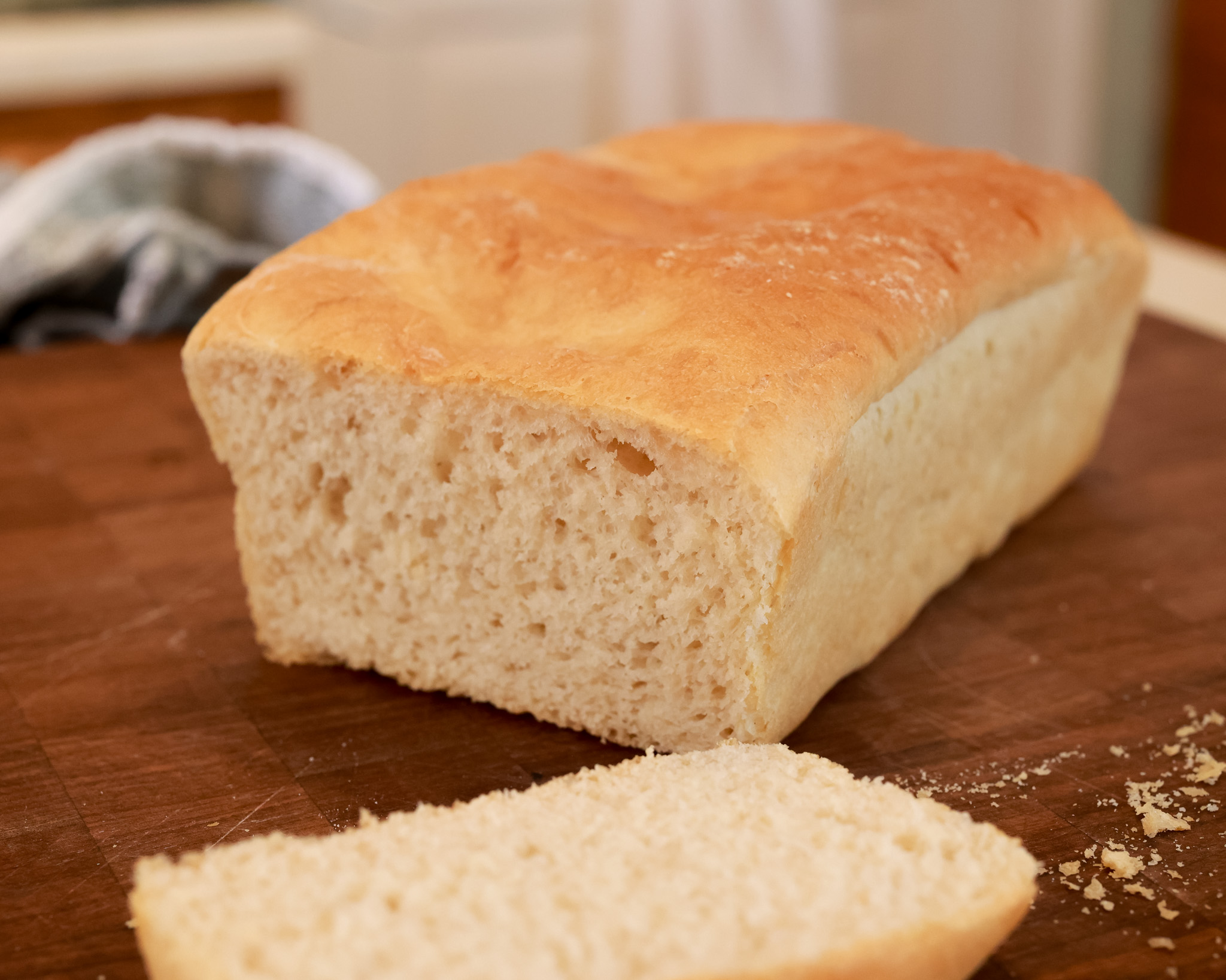
There are some recipes that don’t need dressing up. This is one of them.
This is a straightforward, dependable yeast bread you can make with pantry staples you likely already have on hand. No special flour, no fancy techniques—just a soft, sturdy loaf that works for sandwiches, toast, buttered slices, or serving alongside supper.
If you’re new to bread baking, this is a solid place to start. If you’ve been baking bread for years, this is the kind of recipe you keep coming back to because it simply works.
Why This Bread Works
This recipe uses a higher hydration with a moderate amount of yeast, which gives you a reliable rise without needing long fermentation times. The added fat (lard, butter, or oil) keeps the crumb soft and helps the bread stay tender for several days.
It’s forgiving, flexible, and practical—everything a good everyday bread should be.
Ingredients
- 4 cups all‑purpose flour, plus up to 1 additional cup as needed
- 2 tablespoons active dry yeast
- 2 teaspoons sugar
- 1 teaspoon salt
- 2 cups warm water (about 105–110°F)
- 1/4 cup oil or fat (melted lard, olive oil, or melted butter)
Instructions
1. Activate the Yeast
In a large mixing bowl, combine the warm water, sugar, and yeast. Stir gently and let it sit for 5–10 minutes, until the mixture looks foamy and active.
2. Mix the Dough
Add the salt and oil to the yeast mixture. Stir to combine.
Begin adding the flour, starting with 4 cups. Mix until a shaggy dough forms. Add additional flour, a little at a time, until the dough pulls away from the sides of the bowl but is still soft.
3. Knead
Turn the dough out onto a lightly floured surface. Knead for 8–10 minutes, until the dough is smooth, elastic, and slightly tacky but not sticky.
4. First Rise
Place the dough in a lightly greased bowl, turning once to coat the top. Cover and let rise in a warm place for 1 to 1½ hours, or until doubled in size.
5. Shape the Loaf
Punch down the dough and turn it out onto a floured surface. Divide into two-push each down slightly into a rectangle then fold and pinch seams-place into two greased 9×5 loaf pans.
6. Second Rise
Cover and let rise again for 30–45 minutes, until the dough has risen just above the rim of the pan.
7. Bake
Bake at 375°F for 30–35 minutes, or until the top is golden brown and the loaves sounds hollow when tapped.
Remove from the pan and cool on a wire rack before slicing.
Tips for Success
- Water temperature matters: Too hot can kill the yeast; too cool will slow the rise.
- Don’t over‑flour: A soft dough makes a softer loaf.
- Fat choice: Lard gives the softest crumb, butter adds flavor, and olive oil keeps it light and tender.
- For softer crust: Brush the top with butter while warm.

Simple Homemade Yeast Bread
Ingredients
Equipment
Method
- In a large mixing bowl, combine the warm water, sugar, and yeast. Stir gently and let sit for 5–10 minutes, until the mixture looks foamy and active.
- Add the salt and oil to the yeast mixture. Stir to combine.
- Begin adding the flour, starting with 4 cups. Mix until a shaggy dough forms. Add additional flour a little at a time until the dough pulls away from the sides of the bowl but is still soft.
- Turn the dough out onto a lightly floured surface. Knead for 8–10 minutes, until the dough is smooth, elastic, and slightly tacky but not sticky.
- Place the dough in a lightly greased bowl, turning once to coat the top. Cover and let rise in a warm place for 1 to 1½ hours, or until doubled in size.
- Punch down the dough and turn it out onto the counter. Divid into two/ push down slightly into rectangle shape, fold and pinch seams. Place seam side down into two greased 9×5 loaf pans.
- Cover and let rise again for 30–45 minutes, until the dough has risen just above the rim of the pan.
- Bake at 375°F for 30–35 minutes, or until the top is golden brown and the loaf sounds hollow when tapped.
- Remove from the pan and cool on a wire rack before slicing.
Notes
How to Store
Store bread tightly wrapped at room temperature for up to 3 days. For longer storage, slice and freeze for up to 3 months.
A Note From My Kitchen
This is the kind of bread that gets made because the house needs bread—not because it’s trendy or impressive. It’s dependable, familiar, and fills the kitchen with that unmistakable smell of something good baking.
If you make it once, you’ll likely make it again.
Save this recipe, share it, and keep it in your rotation.